
The Spiritual Significance of Nine Nights
There is a period in the Indian calendar, usually as the monsoon retreats and the air turns crisp with the promise of autumn, when an unmistakable energy sweeps across the land. It’s a feeling of vibrant anticipation, deep devotion, and communal joy. This, for me, is the arrival of Navratri.
Festivals in India are far more than mere holidays; they are vibrant, annual textbooks on our civilization, spirituality, and history. They keep our oldest narratives alive, ensuring that the wisdom of the past remains accessible and relevant today. Among these grand celebrations, Navratri, or the ‘Nine Nights’, stands out as one of the most celebrated and spiritually charged Hindu festivals.
My journey through Navratri is an annual affirmation of faith and a deep dive into the very fabric of our ancient culture. It is impossible to understand this festival without tracing its roots back through the millennia, as the celebration is intrinsically woven into the profound history of Hinduism itself, particularly the tradition that venerates the Divine Feminine, Shakti. This article is my personal exploration of that connection—the stories, the philosophy, and the enduring power of these nine sacred nights.
1. What is Navratri? Decoding the Divine Nine
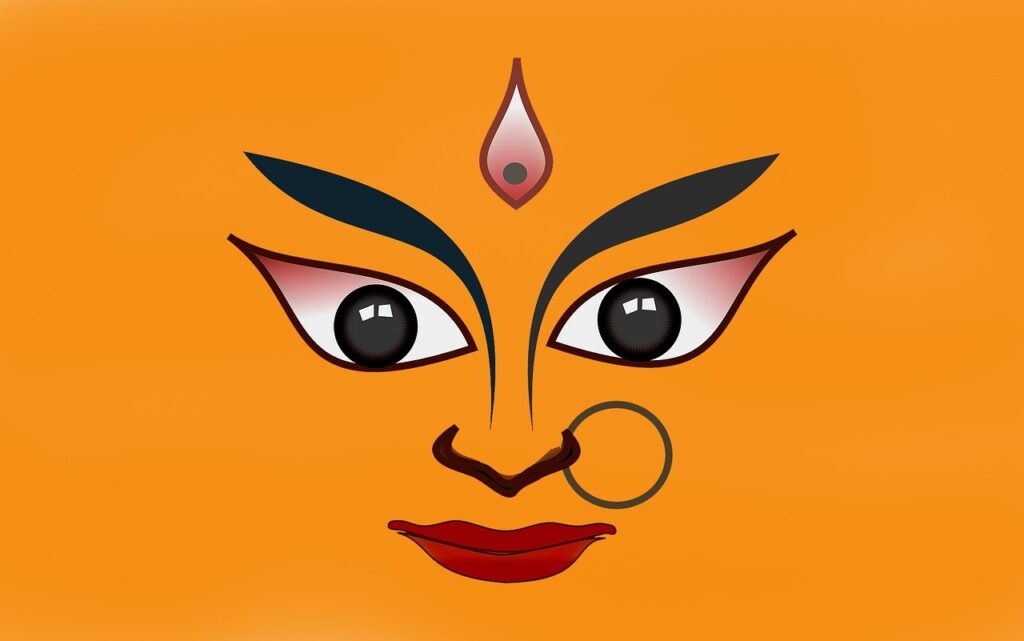
The name Navratri is wonderfully straightforward, derived from the Sanskrit words nava (nine) and ratri (nights). It is a nine-day, ten-night festival dedicated primarily to the worship of the Goddess Durga, an embodiment of the supreme power, Adi Parashakti.
While most people immediately associate the name with the autumn celebration, known as Sharad Navratri (occurring around September-October), it is a fascinating historical fact within Hinduism that the festival is celebrated four times a year. These are the four seasonal transitions, when the forces of nature are believed to be in flux, requiring spiritual stabilization.
The two main observances are the aforementioned Sharad Navratri and Chaitra Navratri (which falls in March-April, coinciding with the start of the Hindu New Year). The other two, Magha and Ashadha Navratri, are often observed more privately by spiritual seekers and ascetics, known as Gupta (secret) Navratris. This historical recognition of cyclical change and the need for periodic spiritual renewal is deeply rooted in our Vedic and Hindu traditions, emphasizing balance with the natural world.
The prominence of Sharad Navratri, however, is unmatched. It is the time when devotees across the Indian subcontinent come together—whether through fasting, ritual worship, or exuberant folk dances—to honour the Divine Mother in her nine magnificent forms, the Navadurga. This dedication to the Goddess underscores its deep roots in the tradition of Shaktism, a major historical current within Hinduism.
2. The Origins of Navratri in the History of Hinduism
To grasp the full weight of Navratri, we must journey back to the historical texts of Hinduism. Ancient references to this period of worship are scattered throughout foundational scriptures, including the eighteen Puranas, particularly the Devi Mahatmya (or Chandi Path), which is central to the Goddess tradition. This text, sometimes dated to the 4th-6th centuries CE, provides the definitive account of the Goddess’s creation and exploits.
The historical significance lies in the rise of the worship of the Divine Feminine (Devi). While the Vedic period primarily focused on male deities, the later Puranic era saw the emergence of powerful, complex female figures who were not merely consorts, but Supreme Deities in their own right. Goddess Durga, created from the collective power of all the gods, represents the ultimate, invincible power (Shakti). Her stories codified the idea that even the most formidable evil can only be conquered by a unified, transcendent feminine energy.
Navratri, therefore, reflects a crucial chapter in the history of Hinduism: the philosophical assertion that good must periodically and definitively triumph over evil. This core philosophy is not only mythological but also psychological. The battle we celebrate is both cosmic and internal, offering a powerful model for the devotee’s own struggle against inner vices like ego and attachment. The festival itself becomes a historical anchor for Hindu values of righteousness and spiritual warfare against darkness.
3. Mythological Stories Behind Navratri: Two Pillars of Victory
The celebrations of Navratri are underpinned by two of Hinduism’s most enduring narratives of victory, each celebrated regionally and spiritually.
The Battle for Dharma: Durga and the Buffalo Demon
The most universal and defining story is that of Goddess Durga’s fierce battle with Mahishasura, the shape-shifting buffalo demon. As the Puranas recount, Mahishasura had grown arrogant and powerful due to a boon, casting the universe into shadow. The gods, unable to defeat him, combined their luminous energies to create Durga. I often visualize the power of this moment: the perfect synergy of the divine, manifesting a champion who was beauty and ferocity incarnate.
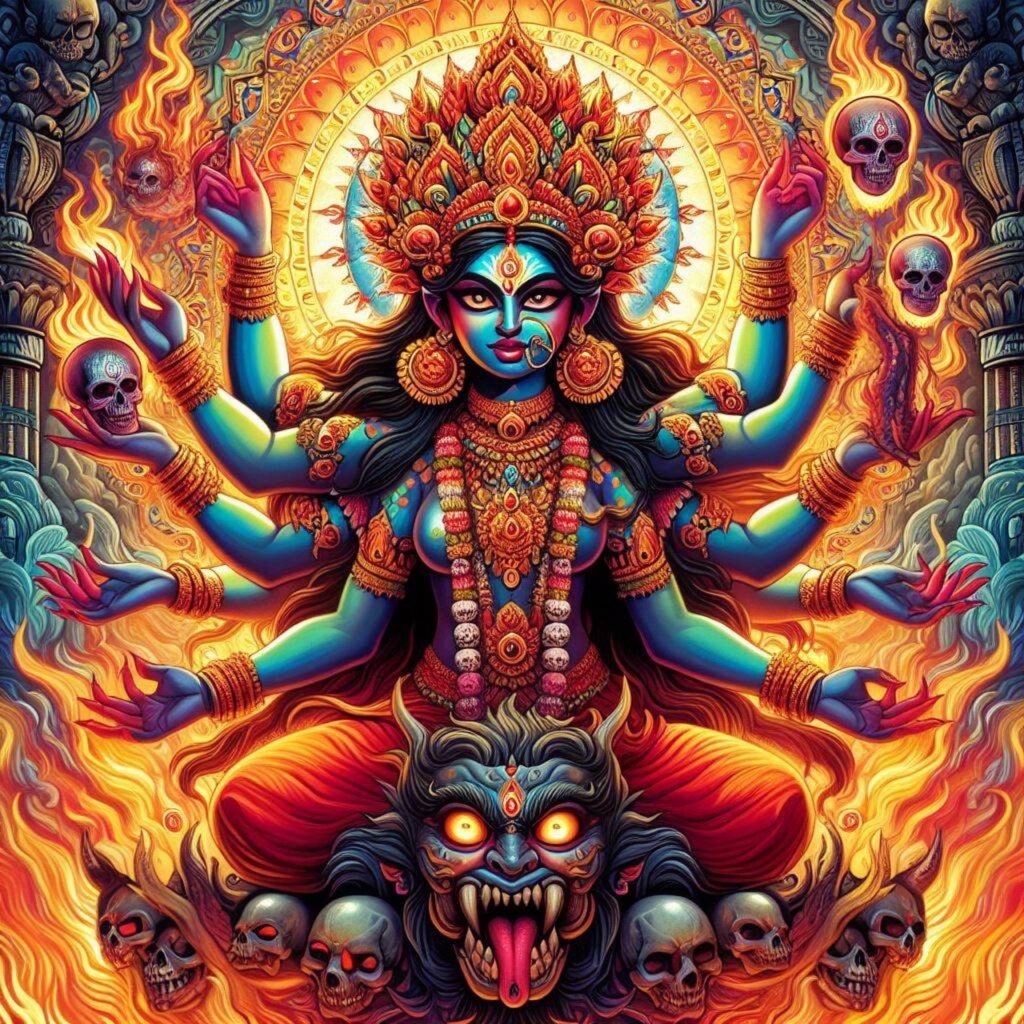
For nine days and nights, the battle raged. This duration gives Navratri its name and its structure. Mahishasura represented the ego, ignorance, and brute strength that seeks to dominate. Durga’s victory on the tenth day, Vijayadashami (the Day of Victory), is thus the ultimate celebration of consciousness conquering unconsciousness and the restoration of cosmic order (Dharma). This narrative is the spiritual heart of Navratri across all its forms.
The Ramayana Connection: Lord Rama’s Worship
In Northern India, particularly, the culmination of Navratri blends seamlessly with another epic victory from Hindu history: the defeat of the demon king Ravana by Lord Rama. According to the Ramayana tradition, Rama, the seventh avatar of Vishnu, worshipped the Goddess Durga (often referred to here as Chandika) to invoke her blessings before his final, decisive battle with Ravana.
It is believed that Rama performed the ritual puja and invoked the Goddess during these nine nights to gain the strength needed to succeed. The tenth day, Dussehra, marks Rama’s triumph, signifying the victory of ideal manhood and moral integrity over adharmic power. This historical synthesis—where the worship of the Divine Mother (Shakti) is essential for the success of the Divine Masculine (Rama)—beautifully illustrates the complementary nature of divine energies in Hinduism, cementing Navratri’s pan-Indian spiritual relevance.
4. Navratri’s Cultural and Historical Importance
Navratri is a masterclass in how a spiritual observance shapes a collective cultural identity. Historically, the festival has always been a time of societal cleansing and recalibration, reflecting core Hindu practices.
The tradition of fasting (vrat) is central to this. I see fasting not as mere denial, but as a discipline—a way to turn the focus inward, purify the body, and conserve energy for spiritual contemplation. This practice, along with daily rituals and chanting of the Devi Mantras, forms a key pillar of Hinduism’s emphasis on self-control and devotion.
Furthermore, the celebratory folk traditions, like the mesmerizing Garba and Dandiya-Raas dances of Western India, are powerful cultural expressions. These aren’t just entertainment; they are acts of devotion. The circular dance of Garba symbolizes the Hindu concept of the Kala Chakra (the wheel of time), where the Goddess (represented by a lamp or Ghat) is the stable, unchanging center, reminding us of the eternal nature of the divine amid the fleeting cycles of life. This blending of deep historical values with vibrant, accessible practices is why the festival has thrived for centuries.
5. Regional Variations of Navratri: The Tapestry of Hinduism
One of the most compelling aspects of the history of Hinduism is its incredible adaptability and diversity, and Navratri is a perfect mirror of this.
In North India, the festival culminates in the dramatic staging of the Ramlila, a theatrical enactment of the Ramayana culminating in Dussehra. The historical practice of burning colossal effigies of Ravana, Meghnad, and Kumbhakarna powerfully reiterates the ultimate demise of arrogance and ego, bringing a tangible, visible conclusion to the nine days of worship.
West India, especially Gujarat, transforms into a swirling kaleidoscope of color and movement. The Garba and Dandiya Raas dances are a historical expression of worship through rhythm and community. Thousands of people gather, dressed in traditional attire, creating temporary sacred spaces that pulse with devotion and joy—a beautiful example of how spiritual reverence is channeled through community art.
In East India, particularly West Bengal, the focus shifts to Durga Puja. While the Navratri framework exists, the celebration is a grand, five-day cultural carnival centered on the clay idols (murtis) of Durga, often depicting her slaying Mahishasura. This is a massive public display of devotion and art, deeply ingrained in the Bengali cultural and religious history.
Meanwhile, in South India, festivals like the Bommai Golu (or Kolu in Tamil Nadu, and Dasara in Karnataka) define the celebration. Families meticulously arrange decorative dolls on tiered steps, symbolizing the cosmic hierarchy and the assembly of the gods. The ninth day, Ayudha Puja, is a historical tradition where tools, musical instruments, and books are worshipped, symbolizing the reverent place of knowledge and vocation in Hindu life. This variety is not a contradiction but a grand affirmation of Hinduism’s all-encompassing nature.
6. Navratri in Modern Times: Preserving Ancient History
Today, Navratri has transcended geographic boundaries. The festival is now a truly global phenomenon, with vibrant Garba nights held in major cities across North America, Europe, and Australia. This global reach highlights the enduring and universal appeal of the Hindu narratives of feminine power, courage, and ultimate victory.
In this contemporary context, the festival serves a vital role: it actively preserves and transmits the ancient history of Hinduism. Every ritual, every dance step, every deity worshipped, connects the modern devotee to the centuries-old philosophical and mythological foundations of the faith.
For me, witnessing Navratri’s global presence provides a powerful sense of unity. It shows that even in an increasingly complex and fast-paced world, people seek spiritual anchoring. The festival offers that anchor, unifying diverse communities under the banner of the Divine Mother’s strength and compassion. It is a unifying cultural and spiritual touchstone in contemporary society.
7. Conclusion: A Timeless Legacy
As the nine divine nights conclude, I feel renewed, spiritually charged, and profoundly connected to the generations that have celebrated this festival before me. Navratri is much more than an annual religious event; it is a profound living document that illuminates the history of Hinduism.
It captures the essence of our faith—the constant cycle of creation and destruction, the philosophical need to conquer inner darkness, and the ultimate triumph of righteousness. The celebration of the Navadurga is a timeless lesson that power (Shakti) is feminine, diverse, and ultimately benevolent.
The history of this beautiful festival is a testament to India’s rich spiritual and cultural heritage. Navratri’s message of resilience, devotion, and the victory of good over evil remains eternally relevant, serving as a beacon of hope and strength for all of us today. It is a legacy I am proud to inherit and participate in.